WhatsApp requires a phone number for every account, but that number does not have to be your personal one. This guide covers five working methods. They are linked devices, a landline, a virtual number, a SIM-free PC or tablet, and the WhatsApp Business API. Stricter VoIP and virtual-number detection appeared through 2026, so method choice now matters more.
What WhatsApp actually requires, and what "without a phone number" really means
WhatsApp requires one verified telephone number per account. "Without a phone number" means without your personal SIM number, not without any number. WhatsApp is an instant messaging application owned by Meta Platforms that ties each account to one telephone number. That number acts as the account's unique identifier, so a substitute number still satisfies verification.
Two separate scenarios sit behind the same search query. WhatsApp uses SMS (short message service) or a voice call to confirm ownership of the number you enter.
Scenario A covers registering a new account without a personal mobile number:
A virtual phone number receives the one-time code in place of your SIM card.
A landline can confirm the account through a voice call in the WhatsApp Business app.
Scenario B covers using an existing account on a device with no SIM card:
Linked Devices mirror a verified account onto a tablet, PC, or second phone.
WhatsApp Web and WhatsApp Desktop run the same account through the primary phone.
One caveat shapes every method below. The WhatsApp Help Center lists VoIP (voice over internet protocol) numbers as unsupported for registration. Enforcement of that policy appears to have tightened through 2026.
Why users choose to register WhatsApp without a personal number
Users who seek this solution typically fall into several distinct categories, and each motive is legitimate. Privacy is the leading driver. A virtual phone number keeps your real telephone number out of public groups and marketplace listings.
A 2022 listing advertised 487 million WhatsApp numbers on an underground data forum (Cybernews, November 2022). Meta disputed the dataset, yet the listing pushed many users toward number separation.
Common reasons users register WhatsApp without their personal number include:
Privacy protection keeps your real telephone number hidden from strangers and business contacts.
WhatsApp Business separates professional messages from personal chats without a second physical device.
Multiple accounts let social managers run several profiles from one mobile device.
Travel flexibility lets you verify a local number abroad without swapping your home SIM card.
SIM-swap resistance reduces exposure when your personal number is the target of account takeover.
Marketplace safety lets freelancers and sellers share a virtual number until trust is established.
Privacy is a legitimate need, not a suspicious motive. SMSFAST supports each case by supplying virtual numbers that receive the verification code. The guide to what a virtual phone number is explains the category.
How WhatsApp verification works, and why a number is required
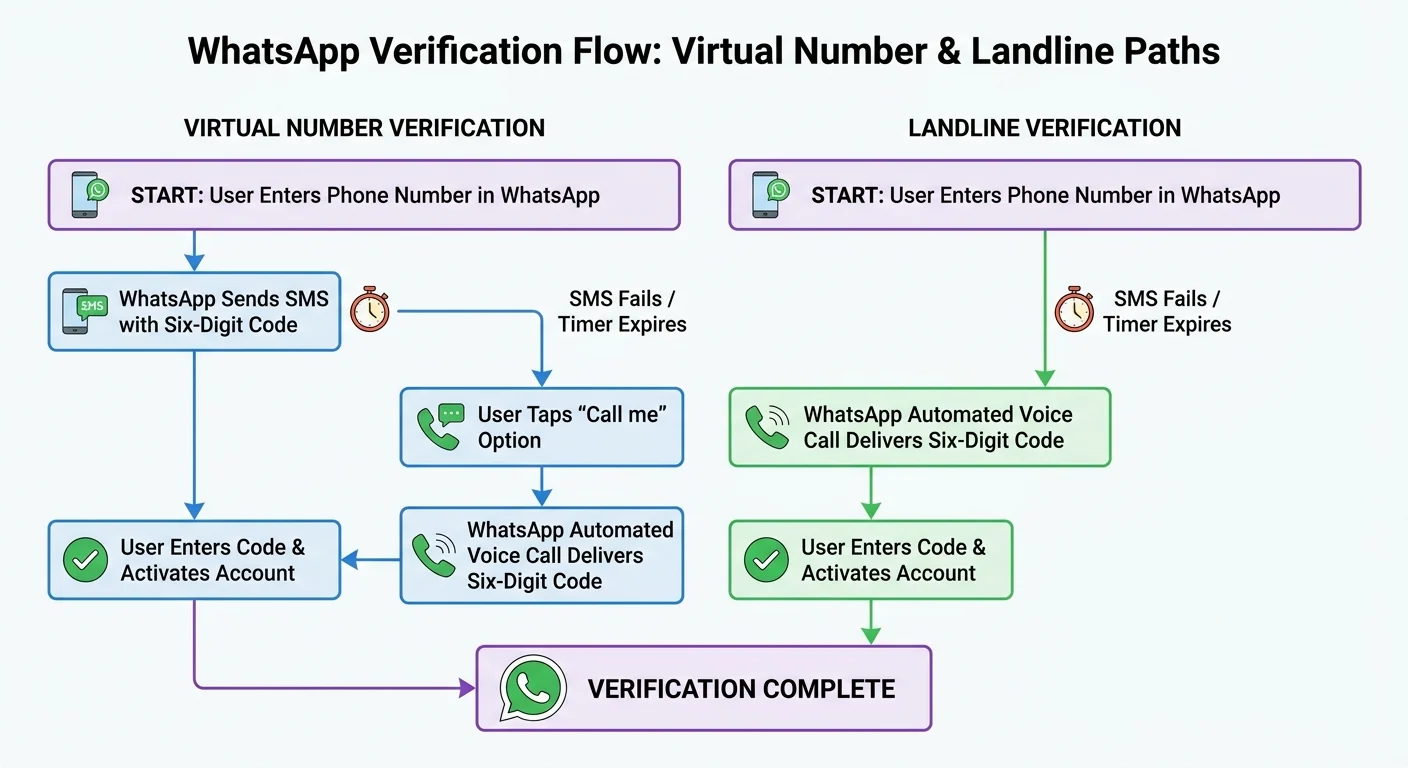
WhatsApp verification works in three steps. You enter a telephone number, WhatsApp sends a one-time code, and you enter that code to activate the account.
A one-time code (also called a one-time password, or OTP) is a six-digit value. The code confirms you control the number. That telephone number then becomes the account's permanent identifier.
The standard path delivers the code by SMS to a mobile number. SMS fails on landlines and many virtual numbers, where the voice path takes over.
Step 1: WhatsApp requests a six-digit code after you submit a telephone number.
Step 2: WhatsApp sends the one-time code by SMS. WhatsApp sends it by automated voice call if you tap Call me after the timer expires.
Step 3: WhatsApp activates the account once you enter the correct six-digit code.
The Call me voice option is the key workaround for numbers that cannot receive SMS. Landline and virtual numbers rely on this voice path more than standard mobile numbers, per the WhatsApp Help Center.
Method 1: use WhatsApp's Linked Devices feature (no new number required)
Linked Devices is the safest method for anyone who already holds a verified WhatsApp account. This feature, called Companion Mode, mirrors one verified account onto other devices without a new number. Linked Devices connects up to four companion devices to one primary phone, or five surfaces (WhatsApp Help Center, 2026). A tablet, PC, or second phone runs the same chats without its own SIM card.
Step by step: how to link a secondary device to an existing WhatsApp account
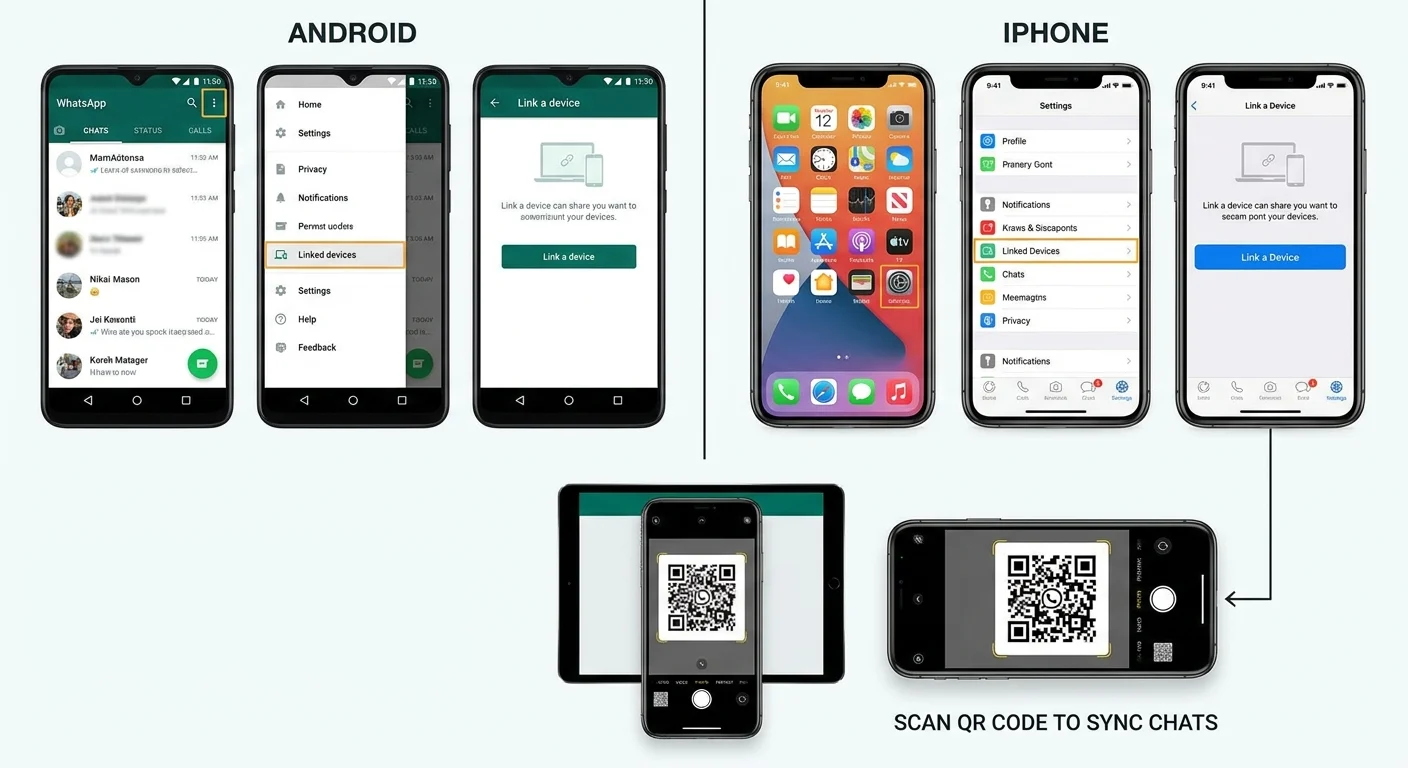
Linking a device takes under two minutes and pairs a companion device through a QR code scan. The QR code expires quickly, so ready both devices before you start.
Open WhatsApp on your primary phone and go to Settings.
Tap Linked Devices, then tap Link a Device.
On the companion device, open WhatsApp Web in a browser or the WhatsApp Desktop app.
Point the primary phone's camera at the QR code shown on the companion device.
Hold the phone steady until the scan completes and chats begin to sync.
Confirm the companion device now appears in your Linked Devices list.
The steps match on Android, iPhone, WhatsApp Web, and WhatsApp Desktop.
Key limitations of the Linked Devices feature
Linked Devices carries four hard limits that every user should weigh before relying on it:
The primary phone must connect at least once every 14 days. All companion devices log out otherwise (WhatsApp Help Center, 2026).
The feature mirrors an existing account and never creates a new, independent account.
The device cap holds at four companions plus the primary phone.
Some actions stay tied to the primary phone rather than the companion device.
The 14-day rule affects travelers most. A primary phone left at home loses companion access after 14 days.
Method 2: register WhatsApp using a landline number
WhatsApp supports landline verification through a voice call, but only inside the WhatsApp Business app. A landline is a fixed-line telephone number that cannot receive SMS, so it verifies through the Call me option. The regular WhatsApp app lists landlines as unsupported, alongside VoIP, toll-free, and premium numbers. This path suits offices that already run a single landline number.
How to register WhatsApp using a landline number, step by step
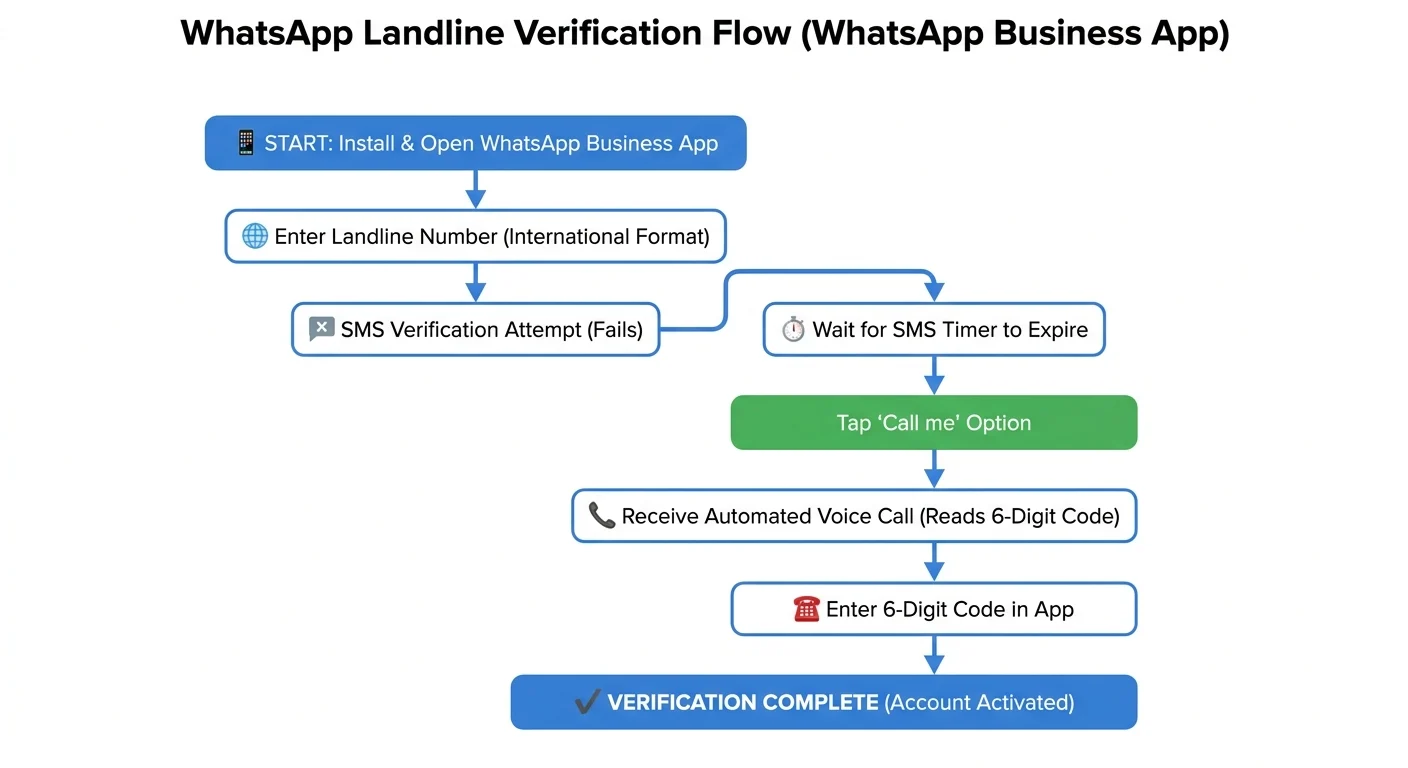
Landline registration runs through the WhatsApp Business app. The method relies on the voice call, since the SMS attempt fails first.
Install the WhatsApp Business app, not the standard WhatsApp app.
Enter your landline number in full international format, including the country code.
Wait for the SMS attempt to fail, which is expected on a landline.
Tap Call me once the SMS timer runs out.
Answer the automated call, which arrives in roughly 30 seconds and reads the code twice.
Enter the six-digit code in WhatsApp Business to activate the account.
Confirm the landline is not voicemail-only and can accept incoming calls.
Landline verification: regional considerations and what to do if the call fails
Landline support is not uniform across all countries, so verification can succeed in one region and fail in another. WhatsApp Business remains the recommended app for this method, since the standard app rejects landlines outright.
If the call never arrives, check the number's full international format. Confirm the line accepts automated international calls, since some carriers block them.
Using WhatsApp Business as a separation tool beyond landline registration
WhatsApp Business separates professional and personal communication, and that value extends past landline verification. Both WhatsApp and WhatsApp Business run on one phone at the same time, a native feature many users overlook.
Separation benefits that WhatsApp Business delivers include:
Distinct account identity keeps client messages away from personal chats.
Business tools add greeting messages, quick replies, and labeled conversations.
Dual-app support runs personal WhatsApp and WhatsApp Business on the same device.
Virtual phone number compatibility lets you register the Business account on a separate line.
Method 3: create a WhatsApp account using a virtual phone number
A virtual phone number is one of the most common ways to register WhatsApp without a SIM card. Virtual numbers are also the highest-risk category in 2026. Defined simply, a virtual number is an online line that receives verification codes without a physical SIM card. This is the method most people mean by "create a WhatsApp account without a phone number."
WhatsApp officially lists VoIP and virtual numbers as unsupported. Flagging grew more frequent in 2026. This method works in practice for many users, yet it sits outside WhatsApp's supported-number policy.
SMSFAST supplies virtual numbers from multiple countries that receive the one-time code in your dashboard. Activation mode fits a single verification within 20 to 90 minutes. Long-term rental holds a number for one day up to one year. If the code does not arrive, you click Cancel and the funds return to your balance instantly.
To register WhatsApp with SMSFAST:
Create an SMSFAST account or log in to an existing one.
Add funds to your balance using a top-up method.
Select WhatsApp as the service, then choose a country.
Buy the number and copy it into WhatsApp when prompted.
Read the one-time code in the SMSFAST dashboard and enter it in WhatsApp.
Refund to balance is not yet available in long-term rental mode; cancellation for long-term rental is coming soon. Get a virtual number for WhatsApp on SMSFAST and read your verification code straight from the dashboard.
How to use TextNow to obtain a free virtual number for WhatsApp
TextNow provides a free US or Canada virtual number over Wi-Fi, funded by ads. Many users verify WhatsApp once with a TextNow number, though success is not certain in 2026. The number can expire or be reassigned if it stays unused, which risks losing the account tied to it.
Install the TextNow app on iOS or Android.
Create a TextNow account with an email address.
Pick a free number, choosing an area code if offered.
Enter the TextNow number in WhatsApp during setup.
Wait for the SMS, then tap Call me if the code does not arrive.
Enter the six-digit code in WhatsApp to finish.
TextNow serves only the United States and Canada. Keep the number active, since a reassigned one can pass to a stranger.
How to use Google Voice for a permanent WhatsApp number (US and Canada)
Google Voice provides a free, stable virtual number for US and Canada users, more permanent than a TextNow line. The number stays assigned to your Google account long-term, which is the key difference from TextNow's expiring numbers. Setup requires a real US phone number for the initial verification.
Sign in to Google Voice with your Google account.
Verify setup with an existing US phone number.
Choose an available Google Voice number.
Enter the Google Voice number in WhatsApp during setup.
Retrieve the SMS code in your Google Voice inbox and enter it in WhatsApp.
Google Voice suits US and Canada users who want a free line they can keep. The real-US-number setup requirement limits it elsewhere.
Other virtual number apps: Hushed, Dingtone, 2ndLine, and temporary number sites
Several apps supply virtual numbers, and each carries a different reliability profile:
Hushed sells private numbers from many countries on trial or low-cost plans, useful for short-term needs.
Dingtone offers free credit-based numbers over Wi-Fi, though verification success varies.
2ndLine gives a free US number over data, similar in scope to TextNow.
Public temporary number sites share one number across many strangers.
Public temporary number sites carry the strongest warning. A shared number lets any visitor read your one-time code; account takeover there is common.
VoIP business services for WhatsApp registration: Skype Numbers, Line2, and Grasshopper
VoIP business services offer a professional alternative to free consumer apps for WhatsApp Business users:
Skype Numbers provide a paid inbound line, though WhatsApp may flag it as VoIP.
Line2 supplies a business number with call and text features for small teams.
Grasshopper targets small businesses with a professional line and extensions.
VoIP detection grew stricter in 2026. The Call me voice path verifies these numbers more reliably than SMS. These services target professionals, not casual users.
Using an eSIM for WhatsApp without a personal number, especially for travelers
An eSIM is an embedded SIM that carries a real carrier number. WhatsApp flags an eSIM far less often than a VoIP line. An eSIM number sits inside a genuine carrier ecosystem, which is why travelers report high verification success. Only eSIMs that include a phone number verify WhatsApp, since data-only plans cannot receive a code.
Buy an eSIM plan that includes a phone number, not a data-only plan.
Install the eSIM profile through your phone's settings.
Activate the line and enter the eSIM number in WhatsApp.
Read the one-time code and enter it in WhatsApp.
An eSIM suits travelers who want a low-flag number without a second physical SIM card.
Using a prepaid international SIM for WhatsApp registration
A prepaid international SIM card is one of the lowest-risk and most overlooked ways to register WhatsApp. The card carries a real carrier number that WhatsApp rarely flags, since it registers a telephone number the traditional way.
Buy a prepaid international SIM card with a phone number.
Insert the SIM card and let it register on the local network.
Enter the SIM number in WhatsApp during setup.
Read the SMS code and enter it in WhatsApp.
Remove the SIM card after verification, since WhatsApp keeps working over Wi-Fi.
Google Fi is one option for US users who want international coverage. This method draws the fewest WhatsApp flags of any virtual approach.
Method 4: run WhatsApp on a PC or tablet without a SIM card
WhatsApp runs on a PC or tablet without a SIM card through two paths. The first path uses Linked Devices to mirror an existing account, with no new number, as in Method 1. A second path uses an Android emulator to build an independent account on a PC. That path still needs a virtual or landline number from Method 3.
WhatsApp Web and WhatsApp Desktop: requirements and setup
WhatsApp Web and WhatsApp Desktop are not independent platforms; both mirror the account on your primary phone. Each connects through Linked Devices, so the 14-day primary-phone rule still applies.
Open web.whatsapp.com in a browser, or install the WhatsApp Desktop app.
On the primary phone, open Settings, then Linked Devices.
Tap Link a Device and scan the QR code shown on the computer.
Wait for chats to sync, then use WhatsApp on the computer.
WhatsApp Web depends on a verified account and cannot register a number by itself.
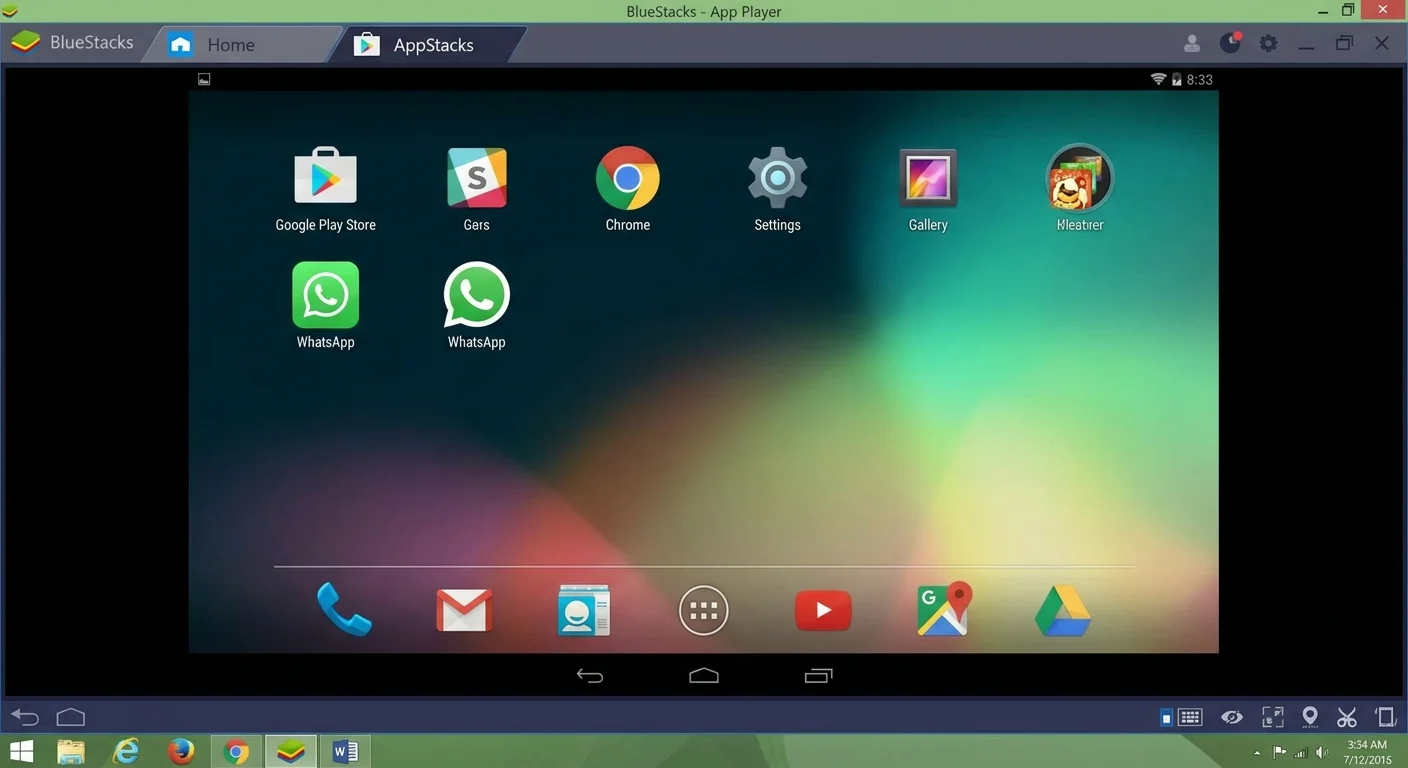
Using an Android emulator (BlueStacks) to run WhatsApp on a PC
BlueStacks is an Android emulator that runs a full, independent WhatsApp install on a PC. The emulator recreates an Android environment on a computer, so WhatsApp behaves as it would on a phone. Verification still needs a virtual or landline number, as in Method 2 and Method 3.
Download and install BlueStacks on your PC.
Sign in to the Google Play Store inside BlueStacks.
Install WhatsApp from the Play Store.
Enter a virtual or landline number and complete verification.
Use the Call me option if the SMS code does not arrive.
BlueStacks is an advanced option for users comfortable installing an emulator.
Method 5: WhatsApp Business API for advanced users and businesses
The WhatsApp Business API is a technical tool for businesses, not a fit for personal use. This API (application programming interface) runs on a dedicated business number, managed through a Business Solution Provider (BSP). It suits developers and companies, and it operates without a personal mobile number.
Official Meta Business Solution Providers include Twilio and 360dialog, both certified for WhatsApp Business API access. For setup details, follow the official WhatsApp Business documentation or a certified BSP partner.
Method comparison: which approach is right for each user type
The comparison below maps each method to cost, permanence, ban risk, and the user it fits best.
Method
Cost
Permanence
Ban risk
Best for
Linked Devices
Free
Tied to primary phone
None
Existing account on extra devices
Landline (Business app)
Existing line
Permanent
Low
Small offices with one landline
Google Voice
Free
Permanent
Medium
US and Canada users
TextNow
Free
Expires if unused
High
Short-term US and Canada verification
Prepaid or eSIM
Paid
Permanent
Lowest
Travelers and privacy-focused users
SMSFAST virtual number
Paid
Rental-based
Medium
Second accounts and platform sign-ups
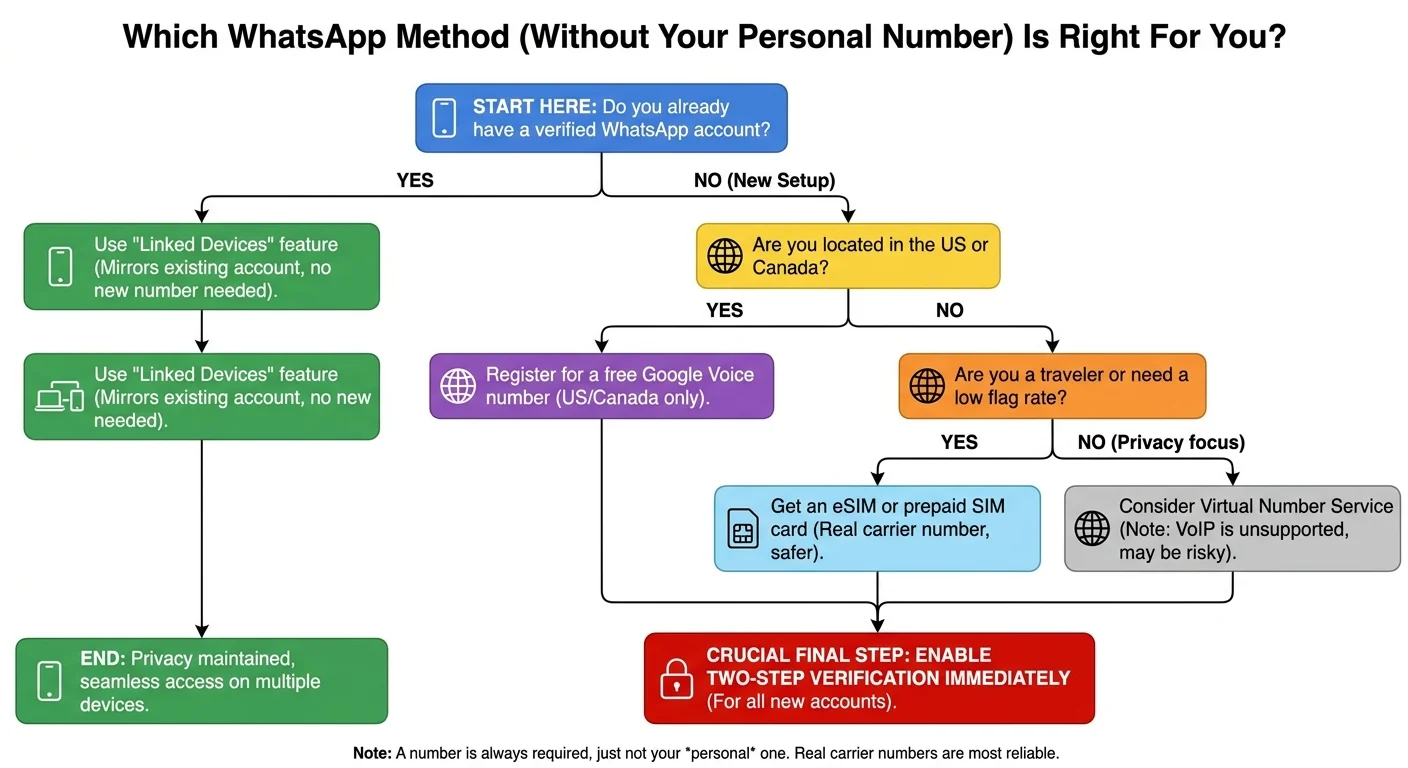
Existing users should start with Linked Devices, since it carries no ban risk. New-account users who want the lowest flag rate should choose an eSIM or prepaid SIM card. Google Voice offers a permanent US line, while an eSIM offers the lowest ban risk.
Risks, limitations, and WhatsApp's terms of service
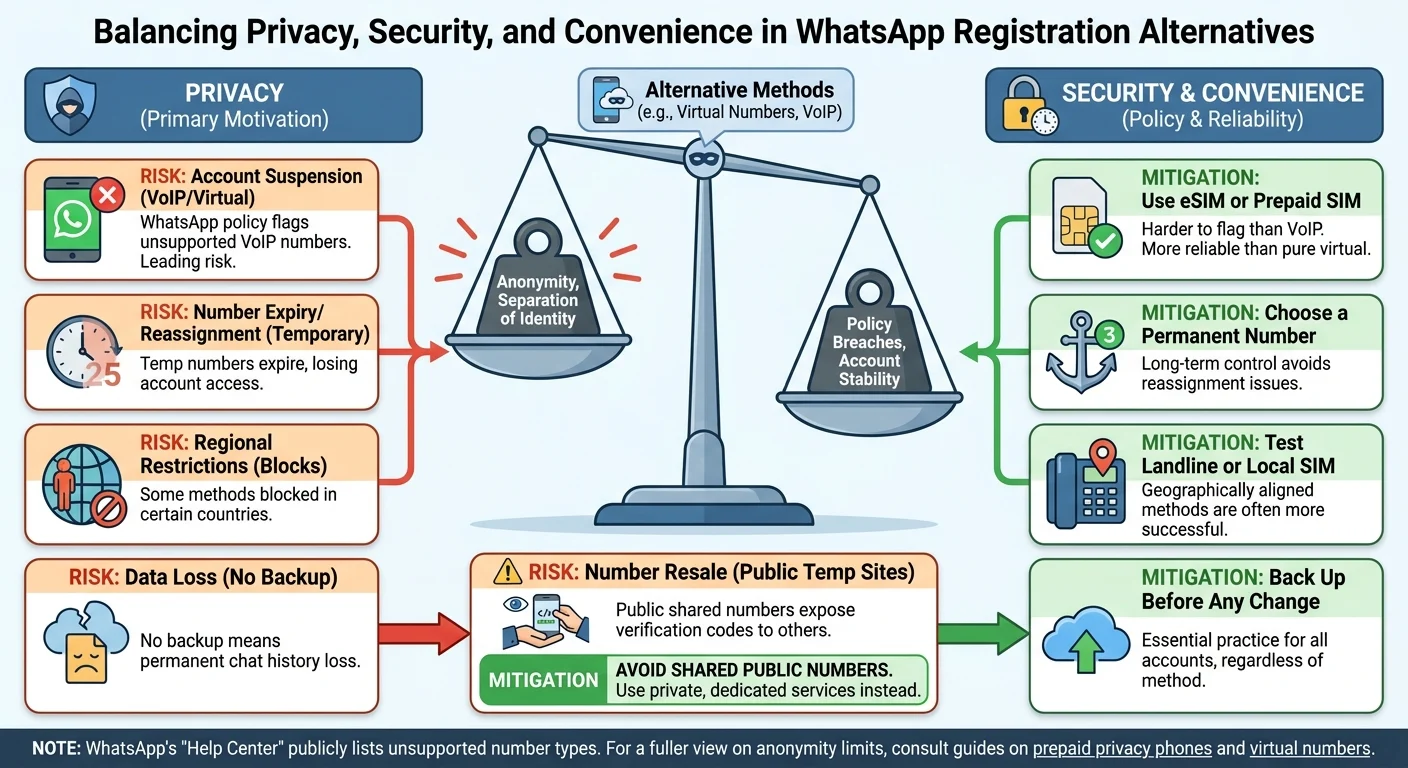
Registering WhatsApp with a virtual number breaches its supported-number policy. That policy lists VoIP as unsupported. Account suspension is the leading risk, since WhatsApp can flag an unsupported number during or after verification. Privacy motivates most users to accept these risks, so weigh each one before you register.
Five risks and their mitigations:
Account suspension follows VoIP and virtual numbers most often; lower it with an eSIM or prepaid SIM card.
A temporary phone number can expire or be reassigned; lower it by choosing a permanent number.
Regional restrictions block some methods in some countries; lower it by testing a landline or local SIM.
Data loss hits accounts with no backup; lower it by backing up before any change.
Number resale on public temporary sites exposes your code; lower it by avoiding shared public numbers.
WhatsApp's own list of unsupported number types is public in the WhatsApp Help Center. For a fuller view of anonymity limits, see the guide on prepaid privacy phones and virtual numbers.
How to back up WhatsApp data before making account changes
Back up WhatsApp data before any account change, or a lost or expired number can erase your history. Three backup options cover most users:
Cloud backup saves chats to Google Drive on Android or iCloud on iPhone.
Local backup stores a copy on the device itself on Android.
Third-party tools export chats for extra safety.
Navigate to Settings, then Chats, then Chat Backup, then Back Up Now. An expired temporary number without a backup takes your messages with it.
Registration troubleshooting: what to do when verification fails
Verification fails for seven common reasons, and most resolve by using the Call me voice option instead of SMS. SMS and the telephone number sit at the center of nearly every failure, so start there.
Wrong number format: re-enter the number in full international format with the country code.
SMS never arrives: wait for the timer, then tap Call me for a voice code.
VoIP number rejected: switch to an eSIM, prepaid SIM card, or the Call me path.
Landline used in standard app: move to the WhatsApp Business app instead.
Too many attempts: wait for the lockout timer before retrying.
Voicemail-only line: enable incoming calls so the code call connects.
Expired virtual number: buy a fresh number and restart verification.
Core troubleshooting step: wait for the SMS timer to run out, then choose Call me. The voice path resolves most virtual and landline verification failures.
WhatsApp and phone number privacy: what the app actually shares
WhatsApp does not publish your number to strangers directly, per its privacy settings. Four scenarios can still reveal it. A Contact who saves your number sees it attached to your account, regardless of your privacy settings. Using a virtual phone number shields your real telephone number in each of these scenarios.
Privacy settings that limit number exposure include:
Group privacy controls who can add you to groups where members see your number.
Profile visibility limits who sees your photo, name, and status.
QR code sharing lets you share a contact without exposing the raw number.
WhatsApp Business labels a professional account so a personal number stays private.
Group privacy hides your number from new groups, while QR sharing hides it from new contacts. The main exposure scenarios stay a saved Contact, a shared group, a leaked backup, and a resold temporary number.
Alternatives to WhatsApp for users who cannot register without a personal number
When WhatsApp repeatedly rejects virtual numbers, users have real practical alternatives. Privacy drives most users toward these messengers, and each one treats the telephone number differently:
Telegram registers with a phone number but hides it behind a public username.
Signal requires a phone number yet supports usernames to limit number sharing.
Session registers with a random account ID and needs no phone number at all.
Wire supports email-based signup, which removes the phone number requirement.
Telegram hides a required number behind a username, while Session needs no number at all, per each app's documentation. For related privacy reading, see the guide on disposable phone numbers.
Quick-start summary: the fastest path for each scenario
Learning how to use WhatsApp without a phone number comes down to two paths. One path fits existing accounts, and the other fits new accounts.
Path A, existing account on a new device:
Open WhatsApp on the primary phone.
Go to Settings, then Linked Devices.
Tap Link a Device.
Scan the QR code on the companion device.
Log in to the primary phone every 14 days to keep the link active (WhatsApp Help Center).
Path B, new account without a personal number:
Choose a virtual number, landline, eSIM, or prepaid SIM card.
Enter the number in WhatsApp.
Wait for the SMS, then tap Call me if needed.
Enter the six-digit code.
Turn on two-step verification right after activation.
Turn on two-step verification for any account you keep. It blocks takeover if the number changes hands.
Conclusion
WhatsApp requires a telephone number, but never your personal one. Existing users should link a device through Linked Devices. US and Canada users can register a free Google Voice number. Travelers get the lowest flag rate from an eSIM or prepaid SIM card.
Privacy stays the thread through every method, since a virtual phone number keeps your real number out of reach. WhatsApp still lists VoIP as unsupported, so a real carrier number stays safest. Turn on two-step verification the moment any account goes live.
Get your virtual number today
SMSFAST delivers virtual numbers in many countries instantly, with no SIM card needed
Frequently Asked Questions
Can WhatsApp Web be used without a phone number?
WhatsApp Web runs without its own phone number, but it mirrors an account already verified on a primary phone. That connection runs through Linked Devices, so WhatsApp Web cannot register a new number alone. The primary phone must log in every 14 days to keep the link active.
Is it possible to create a WhatsApp account on iPhone or Android without a phone number?
Creating a WhatsApp account on iPhone or Android still needs a number, though not your personal SIM. A virtual phone number, landline, eSIM, or prepaid SIM card can receive the one-time code. WhatsApp lists VoIP numbers as unsupported, so an eSIM or prepaid SIM card draws fewer flags.
Can WhatsApp be used on a tablet without a phone number?
WhatsApp runs on a tablet without a phone number through Linked Devices, which mirrors your existing account. The tablet needs no SIM card, since the primary phone holds the verified number. Companion access ends if the primary phone stays offline for 14 days.
Does WhatsApp function without a phone number long-term?
WhatsApp functions long-term through Linked Devices, as long as the primary phone logs in every 14 days. For a standalone account, a permanent number sustains it best. Google Voice or a prepaid SIM card beats an expiring TextNow line. A lapsed number ends account access.
Does WhatsApp support international phone numbers for registration?
WhatsApp supports international phone numbers for registration when entered in full international format with the country code. A prepaid international SIM card or eSIM verifies through SMS, while a landline verifies by voice call in WhatsApp Business. Number type matters more than country.
Can WhatsApp be set up using only an email address?
WhatsApp cannot be set up with an email address alone, since a telephone number is required for initial verification. An email address can be added afterward for account recovery in Settings. Session and Wire are messenger alternatives that support email or ID-only signup.
What is the most reliable long-term method for using WhatsApp without a personal number?
The most reliable long-term method is a prepaid SIM card or eSIM. Both carry real carrier numbers that WhatsApp rarely flags. Google Voice serves US and Canada users well for a free permanent line. Linked Devices remains best for extending an existing account.
Can two WhatsApp accounts run on the same phone?
Two WhatsApp accounts run on one phone by pairing the standard WhatsApp app with the WhatsApp Business app. Each app needs a separate verified number, so one personal number and one virtual phone number work together. This native setup needs no second device.
What happens to a WhatsApp account if a virtual number expires?
An expired virtual number can cost you the WhatsApp account tied to it, along with unbacked chats. A temporary phone number carries the highest expiry risk, while Google Voice and prepaid SIM cards stay assigned longer. Back up chats and enable two-step verification to reduce the damage.
Is using a virtual number for WhatsApp against the terms of service?
Using a virtual or VoIP number sits outside WhatsApp's supported-number policy, which the WhatsApp Help Center lists publicly. WhatsApp can flag or suspend such an account during or after verification. An eSIM or prepaid SIM card carries a real carrier number and stays within supported types.
In this guide, you’ll learn how to create and verify your Twitter account without using a real phone, including safe ways to unlock or confirm existing accounts.